

Why You Need a Helmet Counterweight for Night Vision Hunting
Oct 12th 2026
Reduce Neck Strain on Long Hunts
Night vision can completely change the way you hunt after dark, but mounting a night vision device to your helmet also introduces a challenge that becomes increasingly noticeable during long hunts: weight and balance.
Night vision goggles, mounting hardware, and other equipment place additional weight toward the front of your helmet. Over time, that front-heavy configuration can become uncomfortable and contribute to neck fatigue.
That's where a helmet counterweight for night vision comes into play.
By adding weight to the rear of your helmet, a counterweight helps balance the load created by your night vision setup. For hunters spending hours navigating, scouting, or waiting in the dark, properly balancing your helmet can make your night vision setup considerably more comfortable.
Our team at SilentAF is breaking it down.
What Is a Night Vision Helmet Counterweight?
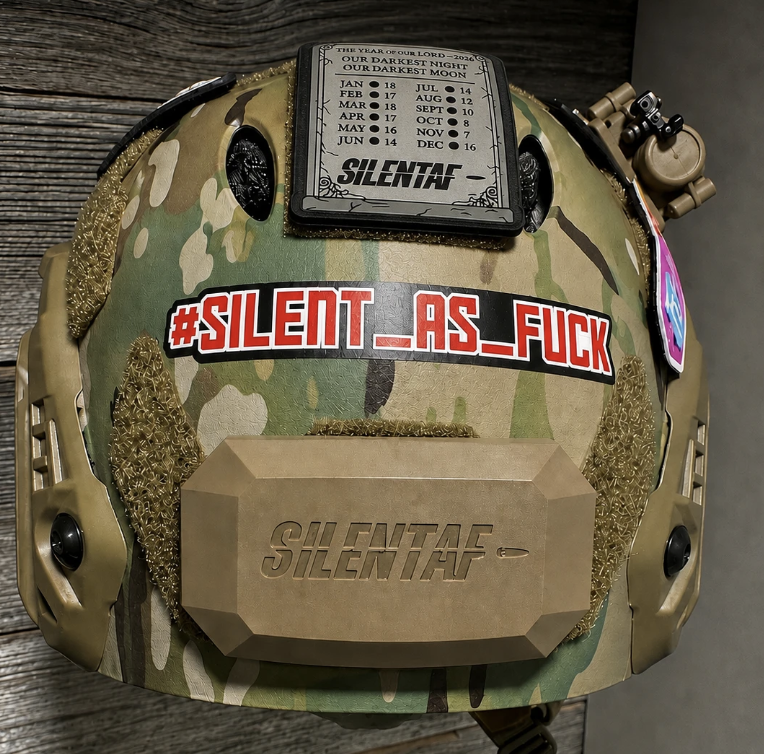
A night vision helmet counterweight is a weighted accessory positioned toward the rear of a helmet to help offset the weight of a front-mounted night vision device.
Consider the typical night vision helmet setup.
At the front of your helmet, you may have:
- Night vision monocular, binocular, or goggles
- NVG mount
- Helmet shroud
- Additional mounting hardware
Depending on your setup, you may also have lights, hearing protection, cameras, communications equipment, and other accessories attached to the helmet.
Although each individual component may not seem particularly heavy, the complete setup can become noticeable after several hours.
More importantly, much of the night vision weight sits in front of your head.
A counterweight helps offset that forward pull by moving some weight behind your head, creating a more balanced helmet system.
Why Night Vision Can Strain Your Neck During Long Hunts
When you're looking at individual product specifications, a few extra ounces might not seem significant.
The problem isn't simply the total amount of weight.
It's also where that weight is located.
Mounting night vision equipment on the front of your helmet changes its center of gravity. Instead of the helmet's weight being relatively evenly distributed around your head, the additional front-mounted equipment creates forward leverage.
Your neck then has to work against that imbalance to maintain a comfortable head position.
During a short range session, you may barely notice it.
During an extended nighttime hunt, the difference can become much more apparent.
Hours spent walking, scanning fields, navigating terrain, sitting, or repeatedly moving your head can make an unbalanced night vision helmet increasingly uncomfortable.
Why a Helmet Counterweight Is Important for Hunting
Hunters may wear their night vision setups for extended periods.
You're not necessarily putting the helmet on for 15 minutes, using your night vision, and immediately taking it off.
Depending on the hunt, you could be wearing your setup while:
- Hiking into a hunting location
- Scanning fields
- Moving through wooded areas
- Waiting for animals
- Navigating uneven terrain
- Tracking
- Moving between hunting locations
- Setting up equipment
- Returning after the hunt
A properly configured night vision helmet counterweight can help make the complete system feel more balanced during those extended periods.
For hunters who regularly run helmet-mounted night vision, that makes a counterweight more than an afterthought. It should be considered part of the complete helmet setup.
Helmet Balance vs. Helmet Weight
There's an important distinction between making your helmet lighter and making your helmet better balanced.
Adding a counterweight technically makes the complete helmet heavier.
That sounds counterproductive at first.
However, properly positioning that additional weight toward the rear of the helmet can help counteract the leverage created by a front-mounted night vision device.
Think about holding a weight straight out in front of your body compared with holding the same amount of weight close to your center of gravity.
The amount of weight hasn't changed, but the way your body experiences it has.
A similar principle applies to your night vision helmet.
The goal isn't simply to minimize the number on the scale. The goal is to build a helmet system that appropriately distributes its load.
How Much Counterweight Do You Need for Night Vision?
There isn't one perfect night vision counterweight for every setup.
The appropriate amount depends on factors such as:
- Weight of your night vision device
- Monocular vs. binocular night vision
- NVG mount
- Helmet weight
- Helmet size
- Other helmet-mounted accessories
- Battery packs
- Lights
- Hearing protection
- Personal preference
A lightweight monocular setup may require a different amount of counterweight than a heavier binocular night vision system.
Instead of simply adding as much weight as possible, the objective should be to find enough rear weight to improve the balance of your particular setup.
Don't Overload Your Helmet
More counterweight isn't automatically better.
Remember that every ounce added to your helmet still has to be supported by your head and neck.
Adding excessive counterweight may improve front-to-back balance while unnecessarily increasing total system weight.
That's why building a comfortable night vision helmet requires considering both overall weight and weight distribution.
Start with the equipment you're actually going to use and configure your counterweight around that setup.
Counterweights and Night Vision Battery Packs
Some night vision setups use rear-mounted battery packs, which can already provide some weight behind the helmet.
This should be considered when determining whether additional counterweight is necessary.
A rear-mounted battery pack may serve two purposes: providing power for compatible equipment while also helping offset some of the front-mounted weight.
However, every configuration is different.
Consider the weight of your complete setup rather than assuming a battery pack alone will provide the ideal balance.
Why Helmet Fit Still Matters
A counterweight cannot compensate for a poorly fitted helmet.
Your helmet's retention system, padding, sizing, and adjustment all play important roles in stability and comfort.
Before adding counterweights, make sure your helmet fits correctly.
A properly adjusted helmet should remain stable rather than excessively shifting when you move your head.
Once the basic fit is dialed in, you can begin adjusting the placement and amount of counterweight to improve your night vision configuration.
Build Your Night Vision Hunting Helmet Around the Complete System
A common mistake when assembling a night vision hunting setup is evaluating every component individually.
The helmet looks light.
The night vision device doesn't seem particularly heavy.
The mount only adds a little weight.
The light is small.
The battery pack isn't very noticeable.
But once everything is installed on the same helmet, those individual components create a much heavier system.
When building your hunting setup, consider the complete configuration:
Helmet + NVG shroud + mount + night vision + lights + hearing protection + batteries + counterweight + accessories
That's the weight you'll actually be carrying during your hunt.
More importantly, think about where each component sits on the helmet.
SilentAF Helmet Counterweights for Night Vision Hunting
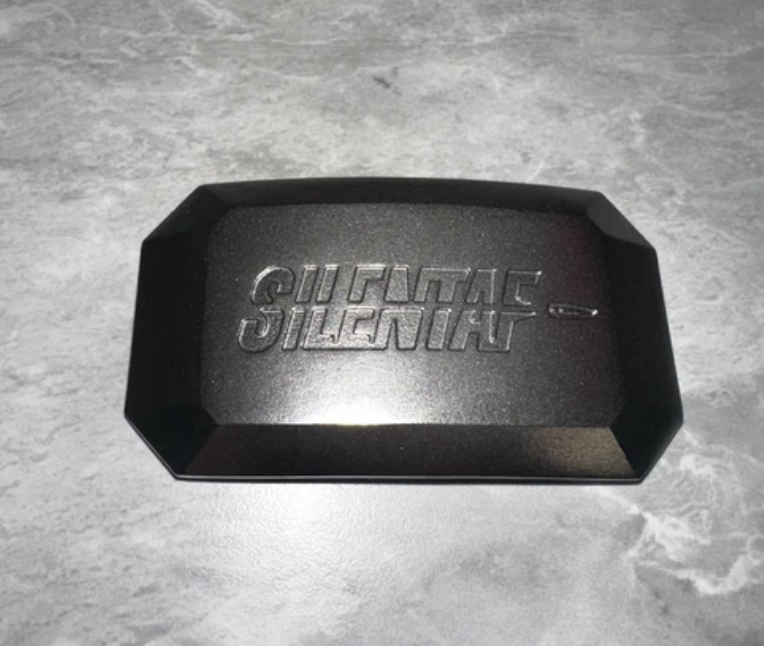
If you're building a helmet-mounted night vision system for hunting, SilentAF helmet counterweights can help you create a more balanced setup. Weighing 10.5 oz, the SILENTAF counterweight adds just enough weight to bring your helmet back into balance without adding unnecessary bulk.
Rather than allowing all of your night vision weight to remain concentrated at the front of your helmet, a properly configured rear counterweight helps offset the load and improve overall balance.
For hunters spending hours behind night vision, that balance can become especially valuable.
Whether you're running a compact monocular or a more substantial binocular night vision setup, your counterweight should be configured around the equipment you actually use.
Add a SilentAF helmet counterweight to your night vision setup and build a more balanced helmet for long nights in the field.
Tips for Setting Up a Night Vision Helmet for Hunting
Before heading into the field, spend some time configuring and testing your helmet.
Make sure the helmet fits correctly, then install the night vision device and other equipment you actually intend to use.
Adjust your counterweight gradually until the helmet feels balanced without adding unnecessary weight.
Afterward, test the complete setup while walking, looking up and down, scanning from side to side, and wearing it for an extended period.
It's much better to identify an uncomfortable or poorly balanced setup before your hunt than several hours into the night.
Is a Counterweight Worth It for Night Vision?
For many helmet-mounted night vision setups, a counterweight can be a valuable addition.
Night vision equipment adds weight to the front of the helmet, and the effects of that imbalance can become increasingly noticeable during extended use.
For hunters in particular, long periods behind night vision make helmet balance an important consideration.
A counterweight won't make your helmet lighter. Instead, its purpose is to redistribute the load and create a better-balanced night vision system.
That distinction is important.
The best helmet setup isn't necessarily the lightest possible configuration. It's one that appropriately balances weight, fit, stability, and the equipment required for your hunt.
Upgrade Your Hunting Setup With a SilentAF Helmet Counterweight
Night vision gives hunters the ability to operate after dark, but a front-heavy helmet can become uncomfortable during long nights in the field.
A properly configured counterweight helps address that problem by balancing the weight of your NVGs, mount, and other front-mounted equipment with weight positioned toward the rear of the helmet.
If you're already investing in night vision, your helmet setup deserves the same attention.
SilentAF helmet counterweights are an easy way to improve the balance of a helmet-mounted night vision system and create a more comfortable setup for extended hunts.
Don't wait until you're several hours into a hunt to realize how front-heavy your helmet is.
Complete your night vision hunting setup with a SilentAF helmet counterweight and build your helmet around better balance from the start.
Be sure to follow SilentAF on Instagram!